

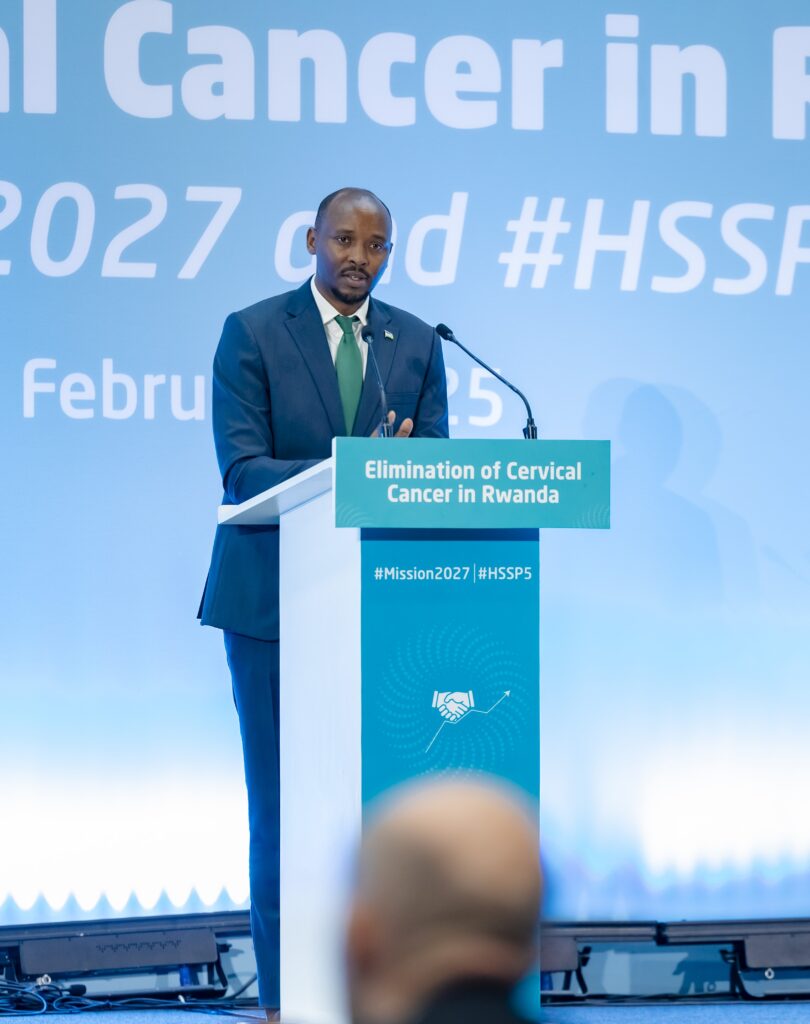
“Rwanda is dedicated to eliminating the gender gap in healthcare. As part of Mission 2027, we are passionately committed to making cervical cancer prevention and care services accessible to all women in Rwanda.
Inequity in health must become a failure of the past. Together we can build a world where every mother, daughter, and sister has the health and strength to contribute fully to her community. Let us seize this moment to ensure that our progress endures, and that together, we create a future free from preventable diseases”
“Mission 2027 Cervical cancer is a serious disease that poses a significant threat to women’s health worldwide. However, it is a disease that can be eliminated. The World Health Organization (WHO) has set ambitious 90-70-90 targets to be achieved by 2030 to enable the elimination of cervical cancer as a public health problem in the next century.
Rwanda is committed to achieving these targets ahead of schedule, with the aim of reaching cervical cancer elimination targets by 2027. Our comprehensive strategy, Mission 2027, is developed in collaboration with partners, focuses on screening, early detection, and treatment.
The Rwanda Ministry of Health is unwavering in its commitment to this cause and this together with the support of both national and international communities. Rwanda aspires to be the first country in Africa to eliminate a cancer that affects women and indirectly impacts families and communities. Our efforts can inspire other African nations and contribute to the global goal of cervical cancer elimination set by the WHO.
Together, we can eliminate cervical cancer.”